click for information about these symbols of world religions and liberation movements


OUR WORK
OUR APPROACH
OUR TEAM
PUBLICATIONS
SPECIALS
RESPONSE FORM
KC STAR COLUMN
VERN'S BLOG
The Reverend Vern Barnet, DMn
bio page    CRES minister emeritus    vern@cres.org


Dear Friend:

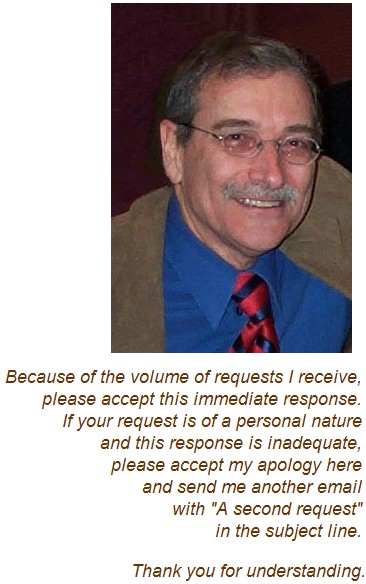
Because of the volume of requests I receive, my staff is authorized to send this response to you. If your request is of a truly personal nature to which this response is inadequate, please accept my apology and write me again with "Vern, this is a second request" in the subject line. Thanks for understanding.

RESPONSE #13 Interfaith Work (c) 2008 by Vern Barnet, Kansas City, MO
 
The key to interfaith understanding is simply building relationships. Books and travel can help, but relationships are the key.

Relationships can be furthered by asking questions designed for sharing experiences rather than argument. 
   How can you listen to others without feeling they are trying to convert you, and how can you present your own faith without appearing aggressive? 
   Can two people with different levels of knowledge about religious matters have a discussion on an equal basis?
  The answer to these questions is yes — if the conversation focuses on not who is right and who is wrong but rather on personal stories. You cannot dispute someone’s own life experiences.
   A structured exercise can get the process going. In a conversation between you and your friend, start with five minutes each to speak without interruption as the other listens.
   It is sometimes helpful to begin with question. Here are some examples:
   *Can you tell me a story when the universe seemed to make sense to you or when you were overcome with a sense of awe?
    *What experiences have you had that point to the ultimate source of life’s meaning for you?
   *Was there a turning point in your life as you considered spiritual questions that helped shape who you have become?
   *Can you tell a story or describe a situation when your faith was especially meaningful to you? 
   *When have you felt closest to God or when has life or the universe made the most sense to you? 
   *What assumptions do people make about you that give you pause?
   *What is it like to be different? 
   *What do you like and dislike about your tradition? 
   *What holidays and practices of your faith do you especially like or dislike? 
   *How did you become an adherent of your faith? How do you view other traditions? What would you like others to know about your faith? 
   *Are particular foods or dietary practice meaningful to you? Do members of your faith have a distinctive dress code? 
   *Who are people in your tradition of whom you are proud? 
   *How does your faith affect your family life? 
   *Has your faith ever guided you in dealing with a problem or opportunity in a personal relationship? Does it guide you in getting along with others? Has it ever inspired you to help or intervene on behalf of others? 
   *How has your faith shaped your views about peace? about the environment? 
   *When does your faith help you feel close to others and when does it make you feel distant?
   *How does your faith help you deal with suffering, your own and of others who have done nothing to deserve their agony or misfortune?
   *Have you ever seen a painting or heard music or walked on the beach or in a forest or played sports or seen a sunrise or learned about science or worked a math problem or held a child or made love when you felt lifted out beyond your ordinary sense of self? 
   Such questions welcome atheists, agnostics and humanists as well as believers into the conversation.
   In listening to someone answering such questions, it is important just to listen. It is not useful, even in your head, to criticize your friend’s choice of words or theological framework.
   What you want is to understand the experience as a genuine expression of what is precious or even sacred to your friend.
   Spiritual ideas cannot be fully comprehended except as they are embedded in stories. Religious terms can mean one thing to you, another to your friend. By listening to how your friend uses words in the context of your friend’s experience, your own ability to use the languages of faith will be expanded.
   Religion is really about stories. There are the stories in the sacred texts, and there are the stories of your own and your friends’ adventures in seeking to find guideposts within the overwhelming mystery of existence. 
   It can be a privilege and a treasure when you and a friend exchange intimate details of that adventure. 
 

SOME OF THE RESOURCES
ON THIS WEBSITE

Please feel free 
to explore all that we offer

www.cres.org


Eight Primers

Appreciative Inquiry
 
Our Vision and Mission

Overview of World Religions/
The Crises of our Age

Kansas City Interfaith Opportunities

Interfaith Prayers 

Planning an Interfaith Series

LINKS local and beyond